Are you still doing keyword research the same way you did 5 years ago?
If you’re strictly looking for high volume, low competition terms, you might be falling behind.
The truth is, the way people use Google is changing fast. With the rise of AI Overviews and conversational search, the old rules don’t always apply. The algorithms are getting smarter, and your keyword research strategy needs to get smarter, too.
In this guide, you’ll learn the most important keyword research tips and trends to help you build a winning strategy for 2026 and beyond.
The Big Shift: 2026 Keyword Research Trends
Before I get to the specific tips, you need to understand the landscape. Here are the 3 biggest keyword research trends that are shaping SEO right now.
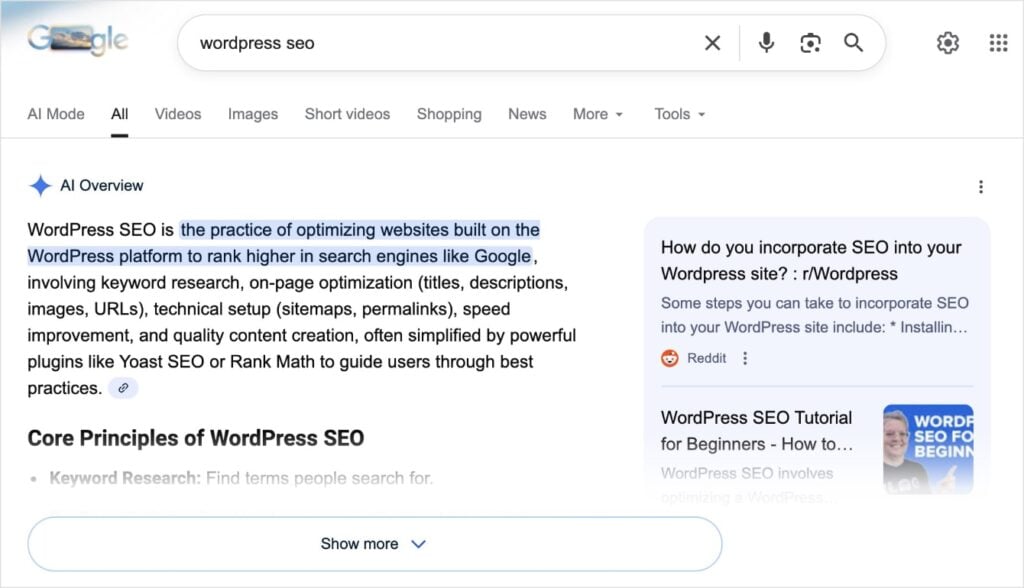
The Rise of AI Overviews
Google is increasingly answering questions directly at the top of the search results with AI-generated summaries.
This means that for simple informational queries, users might not even click on a website.
To win in 2026, you need to target complex, nuanced questions that AI can’t answer with a single sentence.
You also need to optimize your website to appear in these AI Overviews. (Sounds contradictory, doesn’t it? Don’t worry, I’ll explain how to do it in a later section.)
Conversational Search is King
People are starting to talk to search engines like they talk to friends. Instead of typing “wedding guest dress,” they are asking, “What should I wear to an outdoor wedding in October?”
Your keyword research strategy needs to focus on these natural, conversational phrases.
User Intent > Search Volume
Chasing high search volume numbers matters less than ever. A keyword with 10,000 monthly searches is useless if those people aren’t looking to buy what you sell.
The smart money is on finding keywords with the right intent—even if the volume is lower.
6 Actionable Keyword Research Tips & Strategies
Knowing the trends is one thing; acting on them is another. Here are 6 practical keyword research tips to help you build a future-proof strategy.
1. Target “Zero-Search” Volume Keywords
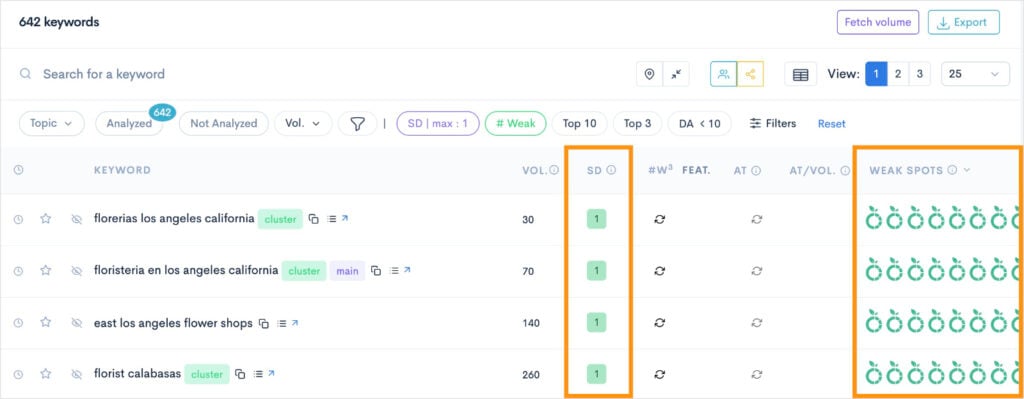
Don’t ignore a keyword just because your tool says it has “0” search volume. These tools are estimates, not facts.
“Zero-search” keywords are often highly specific, long-tail phrases with extremely specific intent. For example, “best CRM for underwater basket weaving business” might show zero volume, but if you sell that software, the person searching for it is your perfect customer.
Don’t be afraid to target these hyper-relevant terms. They often convert better than high-volume keywords.
2. Mine “People Also Ask” for Ranking Gold
Google tells you what your audience wants to know. You just have to know where to look.
Search for your main topic and look at the “People Also Ask” (PAA) box. This section of the search engine results pages (SERPs) reveals questions related to the user’s query.
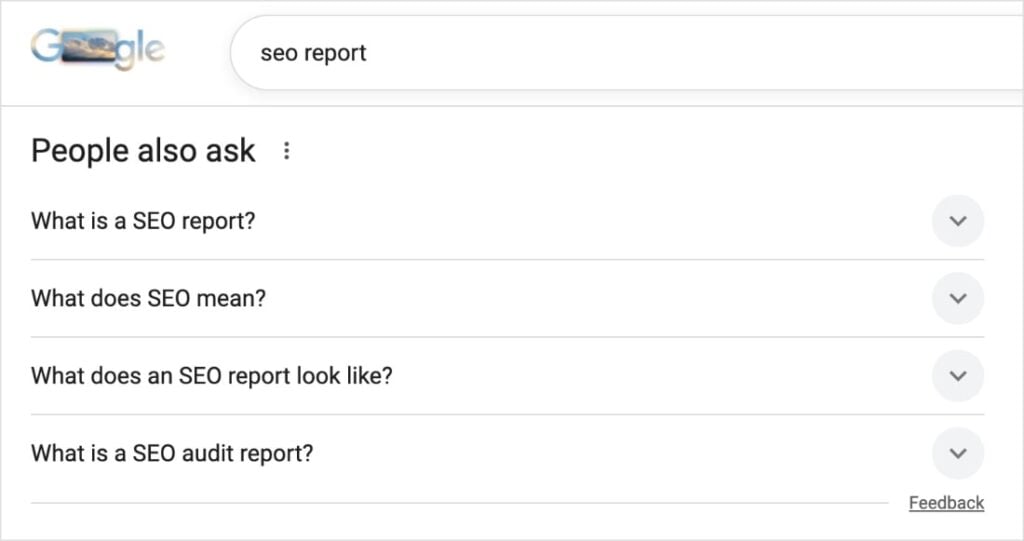
When you click on a few of the questions to expand them, this triggers Google to load even more related questions. Gather these questions and answer them directly in your content, ideally using an FAQ schema.
This is one of the most effective ways to capture traffic and rank for multiple long-tail variations.
3. Build Topic Clusters (The Authority Strategy)
Stop thinking about single keywords and start thinking about entire topics.
Google (and users) appreciate comprehensive topic coverage. It helps users get all the information they’re looking for in one place, keeping visitors on your site longer and increasing engagement.
Topic clusters are a great way to achieve this. They use a “Hub and Spoke” model.
- The Hub (Pillar Page): Create a comprehensive guide targeting a broad, high-volume keyword (e.g., “Digital Marketing”).
- The Spokes (Cluster Content): Write supporting articles targeting specific, related long-tail keywords (e.g., “Email Marketing Tips,” “Social Media Strategy”).
- The Link: Internally link all the spokes back to the hub, and the hub out to the spokes. This structure tells Google you are an authority on the entire subject, boosting the rankings of all your pages.
Pillar Page | Cluster Content |
|---|---|
| The Ultimate Guide to Healthy Eating | Benefits of Healthy Eating Healthy Recipes Nutrition Tips Meal Planning Superfoods: Pros and Cons Components of a Balanced Diet Diet Fads to Avoid. |
4. Analyze the SERPs Before You Write
Data is great, but the SERP is the ultimate truth. Before you write a single word, search for your focus keyword and analyze what Google is already ranking.
- Search Intent Check: If you search “best headphones” and see only ecommerce product pages, a blog post probably won’t rank. Your content needs to align with the existing search intent.
- Format Match: Are the top results “How-to” guides, Listicles, or Videos? Match your content format to what Google is already rewarding. If the top 5 results are videos, you’ll want to embed a video in your post to compete.
5. Optimize for Conversational Long-Tail Keywords
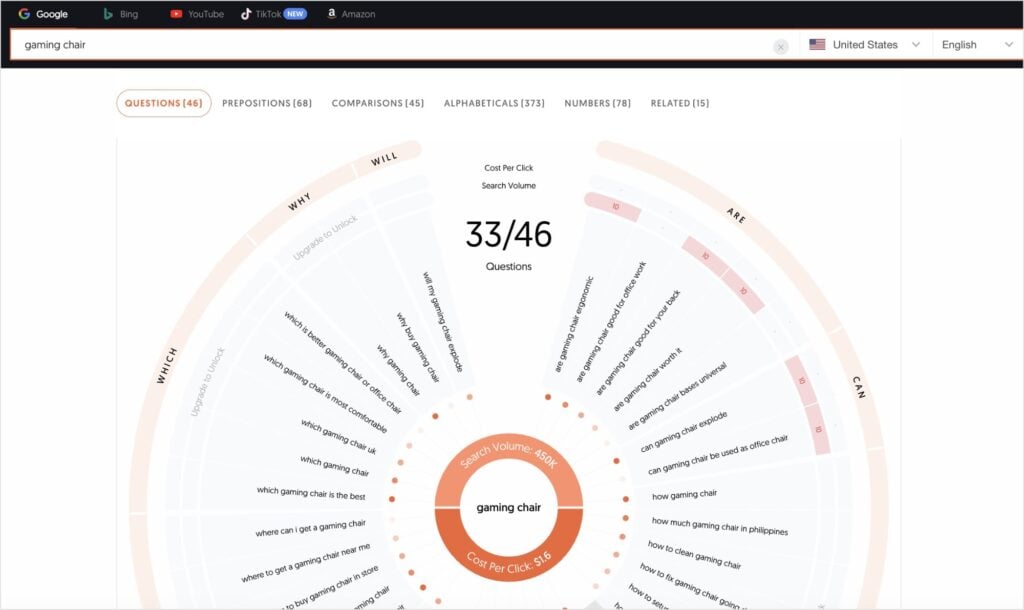
With the rise of voice search and AI chat, people are using natural language more than ever. Instead of targeting robot-speak like “cheap flight NY to London,” target the full sentence: “What is the cheapest time to fly from New York to London?”
To find these, think about the problems your audience has. Use tools like AnswerThePublic (shown below) or simply listen to the questions your customers ask in support emails. Optimizing for these natural phrases makes your content more likely to be picked up by AI assistants.
6. Look for “LSI” Keywords (Semantically Related Terms)
Google doesn’t just look for your main keyword anymore; it looks for context.
Latent Semantic Indexing (LSI) keywords are terms conceptually related to your main topic. For example, if you’re writing about “Apple,” Google looks for words like “pie,” “orchard,” and “fruit” to know you mean the food, or “iPhone,” “Mac,” and “Cook” to know you mean the tech company.
Sprinkling these related terms throughout your content helps Google understand the depth and context of your article, which can improve your rankings.
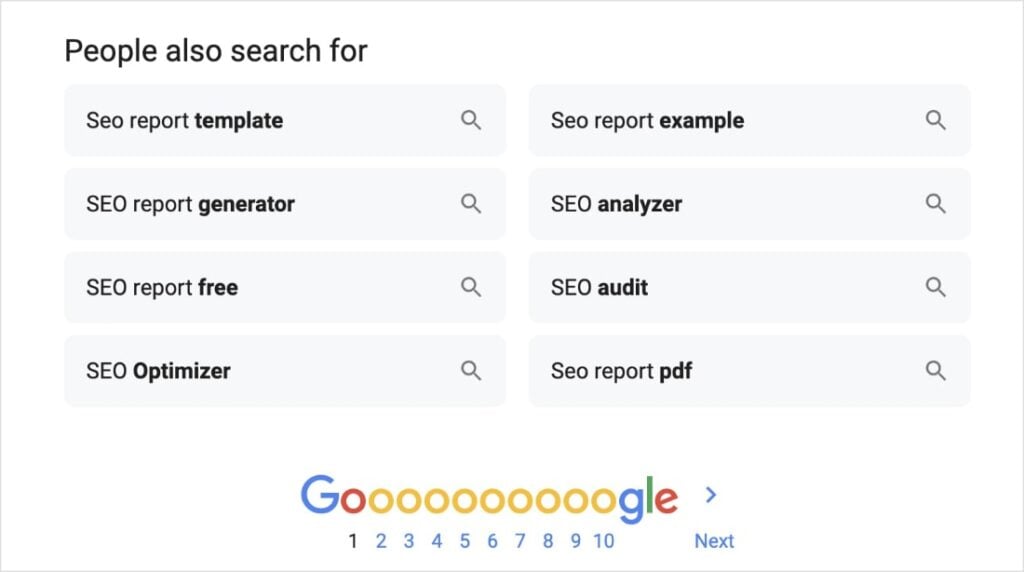
You can find these easily at the bottom of Google search results under “People also search for” or “Related searches.”
How AIOSEO Helps You Execute This Strategy
You don’t have to manage this keyword research strategy alone. Having the right tool is what allows you to execute it easily and at scale.
All in One SEO (AIOSEO) is the best SEO plugin on the market. It saves you time optimizing your website while ensuring you don’t miss any ranking opportunities.
Here’s how it helps you implement the keyword research tips we covered in this post:
1. Find New Keywords Right Inside WordPress
Tired of switching tabs to find keywords and check search volume?
I do a lot of keyword research, and I know how much of a time sink it can be to switch tools constantly while trying to write. That’s why I appreciate how AIOSEO integrates directly with Semrush, one of the top keyword research tools.
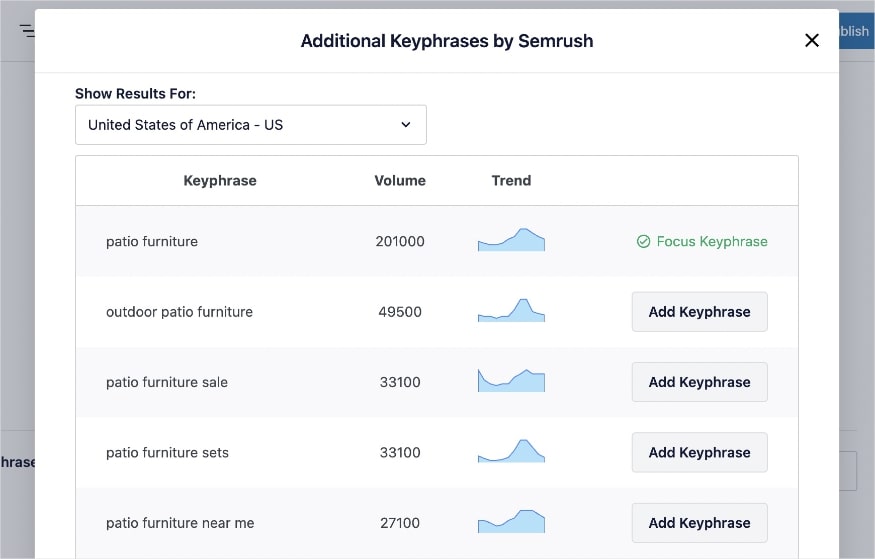
When you set a focus keyphrase for your post, you can click a button to “Get Additional Keyphrases.”
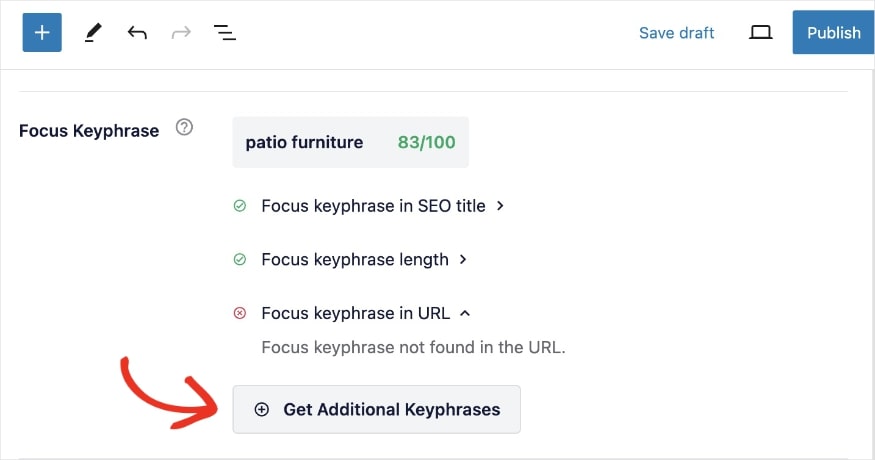
AIOSEO will show you a list of related keywords along with their search volume and trends.
This makes it easy to find those LSI keywords and long-tail variations we discussed, helping you build out your topic clusters without ever leaving your editor.
2. Perfect Your Optimization With TruSEO
Targeting a keyword is pointless if your content isn’t optimized for it.
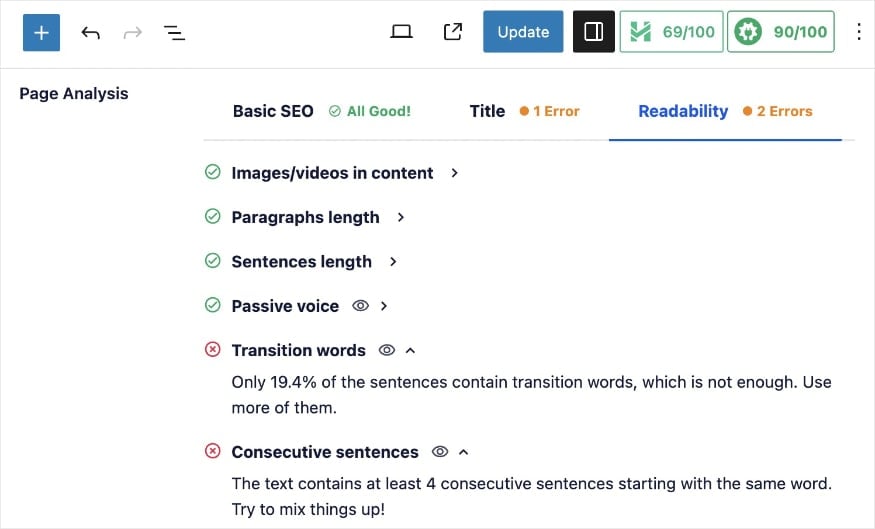
AIOSEO’s TruSEO On-Page Analysis acts as your personal SEO coach. As you write, it scores your content and gives you an actionable checklist.
Here we see the Focus Keyword Checklist, which checks for your primary keyword in all critical areas.

It also has a Readability Checklist that analyzes how easy it is for users to read and understand your content.
3. Add FAQ Schema With Ease
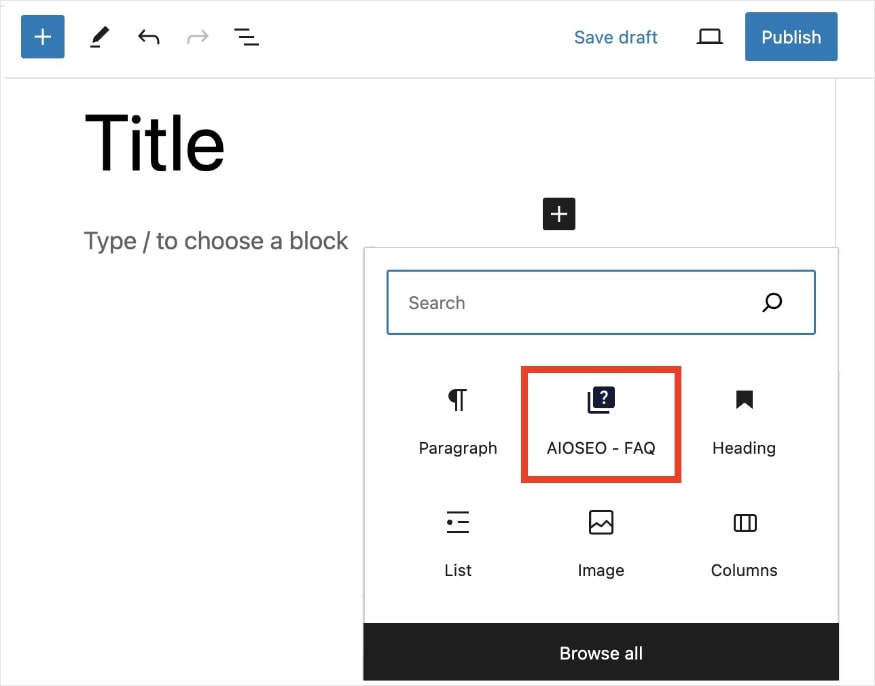
We talked about the importance of answering user questions. AIOSEO makes this technically simple with its FAQ Block.
To use this feature, just search and add the “AIOSEO – FAQ” block to your desired post or page.
This will open an FAQ box where you can add your question and answer.
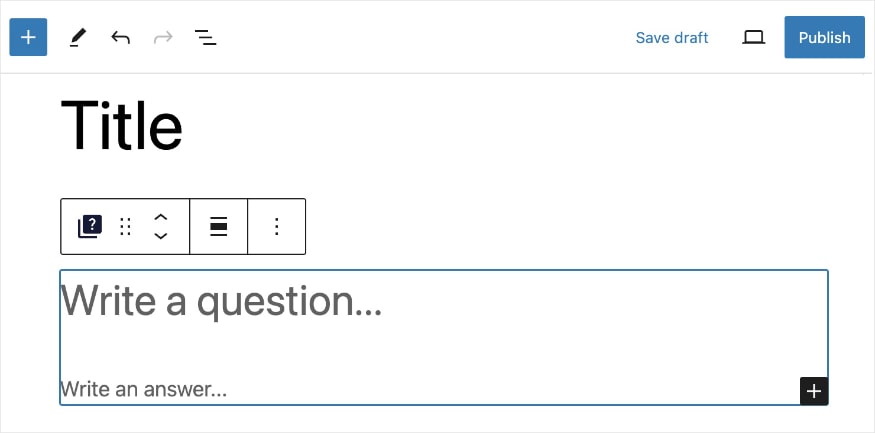
The plugin will automatically add FAQ schema to your post, ensuring search engines can easily understand your content. It also increases your chances of ranking in Google People Also Ask.

4. Write Better Titles With AI
Optimizing for conversational search means writing titles that hook human readers.
AIOSEO’s AI Content Generator can instantly brainstorm catchy, click-worthy headlines. It incorporates your keywords naturally, helping you improve your click-through rate (CTR) with zero effort.
To use this tool, simply click the AI button next to the Post Title field in the WordPress editor. (This function works for the meta description, too.)

Then, choose the tone and audience for your SEO title tag.
Once you’ve made your selections, click Generate SEO Title.

From here, you can select any of the AI-generated titles and add them to your post by clicking the plus (+) button.

It’s fast and guarantees you a compelling, keyword-rich title that took zero effort.
Keyword Research Tips: What’s Next
As we move into 2026, the winning keyword research strategy is one that prioritizes user intent, conversational language, and comprehensive topic coverage over simple search volume.
By focusing on answering real questions and building authority with topic clusters, you can future-proof your content against algorithm changes.